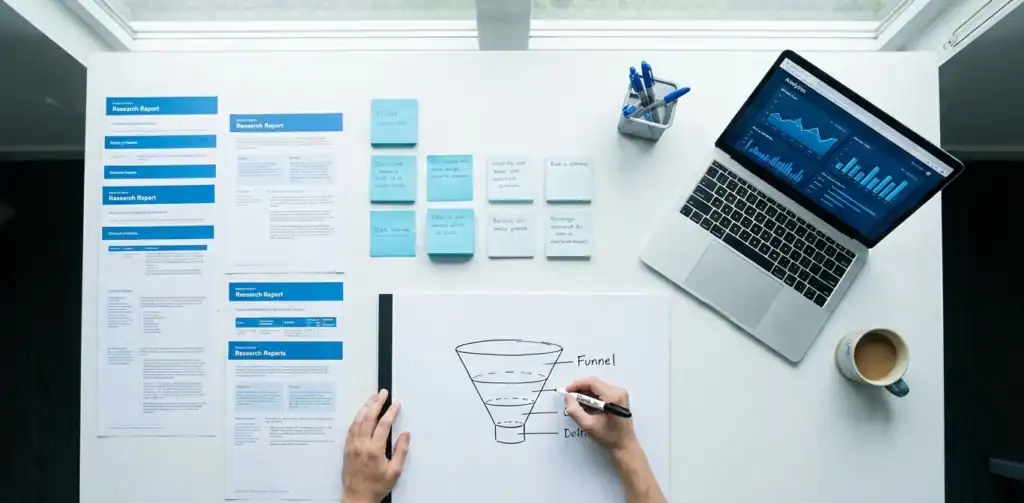
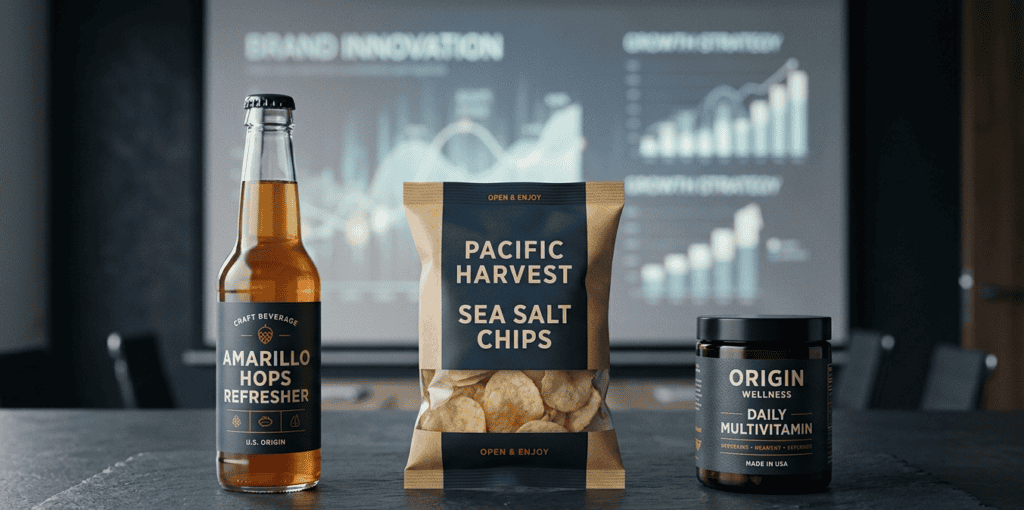
The food and beverage industry is changing faster than most brands can respond. AI-powered product development, direct-to-consumer models, and platform-driven retail are rewriting the rules – and the brands that hesitate are already losing shelf space to the ones that moved first.
According to Clarivate’s Top 100 Global Innovators 2026 report, the companies setting the pace share one defining trait: they systematically invest in structured innovation before disruption forces their hand. That’s the entire premise of disruptive innovation consulting – and it’s becoming the highest-leverage investment a growing F&B brand can make.
If your brand is scaling, entering new retail channels, or trying to carve out category leadership in the U.S. market, this article breaks down exactly what disruptive innovation consulting is, what the best advisory frameworks look like, and why the brands that get this right grow differently than those that don’t.
What Is Disruptive Innovation Consulting – And Why Does It Matter in 2026?
Disruptive innovation consulting is a structured advisory practice that helps businesses identify, prepare for, and capitalize on market-disrupting forces. Unlike traditional strategy consulting – which optimizes what already exists – disruptive strategy advisory helps brands spot what’s coming before it threatens their position, and build the capabilities to lead the shift rather than survive it.
In 2026, innovation consultants are focused on three core priorities:
- AI-powered product and go-to-market strategies that compress time-to-market
- Ecosystem partnerships that allow emerging brands to punch above their weight
- Trend anticipation frameworks that turn consumer behavior signals into actionable product and positioning roadmaps
For U.S. F&B brands specifically, this matters enormously. The category is being disrupted from multiple directions simultaneously: retail consolidation, private label pressure, health and wellness pivots, and shifting shopper behavior post-pandemic. Brands that treat innovation as an annual brainstorm are exposed. Brands that embed disruptive strategy advisory into their operating model are building moats.
“65% of the fastest-growing consumer brands cite collaborative innovation frameworks as a primary driver of their growth acceleration.” – Innovation benchmarking data, 2025-2026
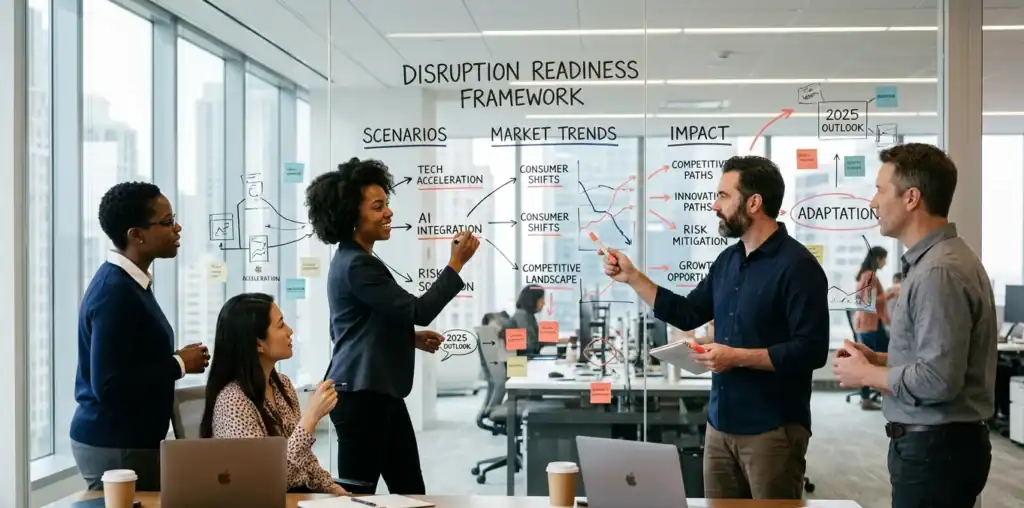
What Leading Disruptive Strategy Advisory Actually Looks Like
The most effective disruptive strategy advisory isn’t just about generating ideas. It’s about building a repeatable system for evaluating market signals, assessing your readiness to act on them, and executing with precision.
Firms like EY-Parthenon have built entire practices around this – helping companies identify disruptive growth vectors, assess competitive vulnerability, and sequence strategic moves in markets undergoing structural change. The underlying methodology is rigorous, data-driven, and operationally grounded.
For F&B brands operating in the $1M–$50M revenue range, the same principles apply – but the execution looks different. You don’t need a global consulting firm. You need a disruptive strategy advisory partner who understands your category, knows how U.S. retail and DTC actually work, and can move at the speed your brand demands.
Key deliverables from a serious disruptive innovation consulting engagement include:
- A clear picture of where disruption is most likely to hit your category in the next 18–36 months
- A Disruption Report Card that scores your brand’s current position and identifies your highest-risk gaps
- A prioritized innovation roadmap tied directly to your growth objectives and resource reality
- Go-to-market strategy development for disruptive product concepts or brand pivots
The Disruption Readiness Assessment: A Framework That Works
One of the most valuable tools in disruptive innovation consulting is the disruption readiness assessment – a structured process that evaluates how prepared your brand is to navigate and lead through market disruption.
A well-designed disruption readiness assessment moves through five phases:
1. Environmental Scanning
This is where you systematically monitor the macro and competitive landscape – tracking technology shifts, regulatory changes, consumer behavior data, retailer strategy, and emerging challenger brands. The goal isn’t to predict the future; it’s to ensure you’re not surprised by it.
2. Vulnerability Evaluation
Once you know what’s moving in the market, you assess where those movements intersect with your current business model. Which of your revenue streams are most exposed? Which retail relationships are at risk? Where does your product portfolio have the least defensibility?
3. Adaptive Capacity Mapping
This step evaluates your internal capability to respond – speed of decision-making, supply chain flexibility, product development bandwidth, and team readiness. Many brands know disruption is coming but lack the organizational capacity to respond at the speed required.
4. Scenario Planning
Effective scenario planning doesn’t mean trying to predict one future. It means stress-testing your strategy across multiple plausible futures – a retail recession, a competitor breakthrough, a regulatory shift – and identifying what you’d do differently in each.
5. Continuous Learning Integration
The brands that sustain competitive advantage treat readiness assessment as an ongoing practice, not a one-time project. Building review cycles and market signal monitoring into your operational rhythm turns disruption readiness from a moment into a muscle.
Innovation Gap Analysis: Knowing Exactly Where You’re Behind
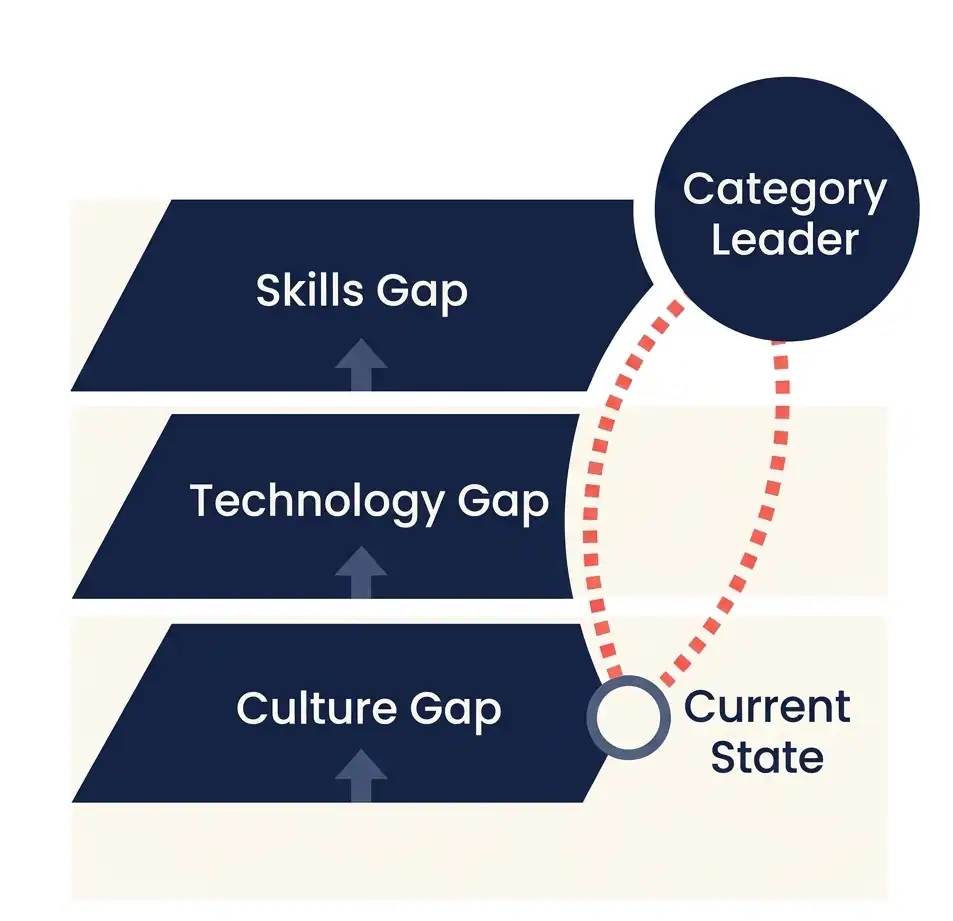
Before you can disrupt a market, you need to know where your brand is operating below its potential. That’s the function of innovation gap analysis – a structured diagnostic that identifies the disparities between where your brand is today and where it needs to be to compete for category leadership.
A rigorous innovation gap analysis examines three layers:
- Skills gaps: Does your team have the capabilities to execute on your innovation ambitions? Are there critical functions – R&D, consumer insights, retail strategy, digital commerce – where you’re underpowered?
- Technology gaps: Are you leveraging the data, tools, and platforms that your fastest-growing competitors use as standard practice? Where is your tech stack creating drag instead of acceleration?
- Culture gaps: Does your organization have the decision-making culture, risk tolerance, and cross-functional collaboration to actually execute on disruptive ideas at speed?
The power of innovation gap analysis isn’t just in identifying the gaps – it’s in prioritizing them. Not every gap is equally consequential. A skilled innovation consultant will help you distinguish between gaps that are strategic liabilities and gaps that are simply inefficiencies.
For emerging brands in particular, innovation gap analysis often reveals leapfrog opportunities – places where the right technology adoption or the right partnership can close years of capability deficit in a matter of months. That’s where disruptive growth advisory gets exciting.
Disruptive Growth Advisory: From Diagnosis to Acceleration
Disruptive growth advisory is the execution layer that follows assessment and analysis. This is where strategy becomes action – new business models, new channel strategies, new product architectures, and new partnership frameworks that position your brand to grow in ways your current model can’t support.
The most valuable disruptive growth advisory engagements combine:
- AI-powered market and consumer analysis to identify whitespace before competitors do
- Business model innovation – moving beyond product into services, subscriptions, licensing, or co-manufacturing models that change your economics
- Strategic partnership development with retailers, co-packers, ingredient suppliers, or technology platforms that accelerate your capabilities
- Go-to-market system design for new channel entries – whether that’s Walmart, Target, Amazon, foodservice, or international markets
Consider a hypothetical mid-sized better-for-you snack brand entering the U.S. market from a strong regional base. Through a structured disruptive innovation consulting engagement, they might identify that their packaging innovation is two cycles behind category leaders, that their DTC unit economics are unsustainable at current AOV, and that a co-manufacturing partnership could unlock 40% margin improvement on retail SKUs. Addressing those three gaps in sequence – with the right advisory – is how a $5M brand starts behaving like a $20M brand.
Yventure’s Core Innovation Services at a Glance
| Service | What It Delivers | Best For |
| Disruption Readiness Assessment | Scan threats, map scenarios, identify vulnerabilities before they become crises | Brands entering new retail channels or facing competitive pressure |
| Innovation Gap Analysis | Data-driven diagnostic of skill, tech, and culture gaps blocking growth | Brands preparing for scale or a major market entry |
| Disruptive Growth Advisory | New models, AI-powered market analysis, partnership development, GTM execution | Growth-stage brands ready to accelerate U.S. market penetration |
Why Yventure Strategy Is Built for This Moment
Most innovation consultants operate at 30,000 feet. YVenture Strategy operates at ground level – in the category data, retailer relationships, and operational realities that determine whether a brand actually wins on shelf and in the market.
We’ve helped emerging F&B and wellness brands earn Walmart Vendor of the Year recognition, become #1 in the RTD category, and execute Amazon growth strategies that drove measurable revenue acceleration. That track record exists because we combine the strategic rigor of disruptive innovation consulting with the executional depth of a team that has built, launched, and scaled consumer brands in the U.S. market.
When we run a disruption readiness assessment for your brand, we’re not just scoring you against a generic rubric. We’re benchmarking you against the actual competitive dynamics of your category, the specific expectations of the retailers you’re targeting, and the consumer behavior trends that will define your window of opportunity.
When we conduct innovation gap analysis, we’re identifying the specific changes – in your team, your technology, your product portfolio, or your go-to-market approach – that will move the needle fastest for a brand at your stage.
And when we deliver disruptive growth advisory, we stay in the work with you – because strategy that doesn’t translate to execution isn’t strategy. It’s just a presentation.
Ready to Know Where Your Brand Stands?
The brands that win category leadership in 2026 aren’t waiting to be disrupted. They’re using structured disruption readiness assessments, innovation gap analysis, and disruptive growth advisory to move first – and move smart.